


State: MD
County: Anne Arundel
Owner: State
Location: Rural
Spans: One-span
Beam material: Concrete
Max Span Length (ft.): 58
Total Bridge Length (ft.): 58
Construction Equipment Category: Conventional
ABC Construction Equipment: Conventional
State ID Number: 02072
NBI Number: 100000020072010
Coordinates
Latitude: 38.98610 | Longitude: -76.6089

Bridge Description
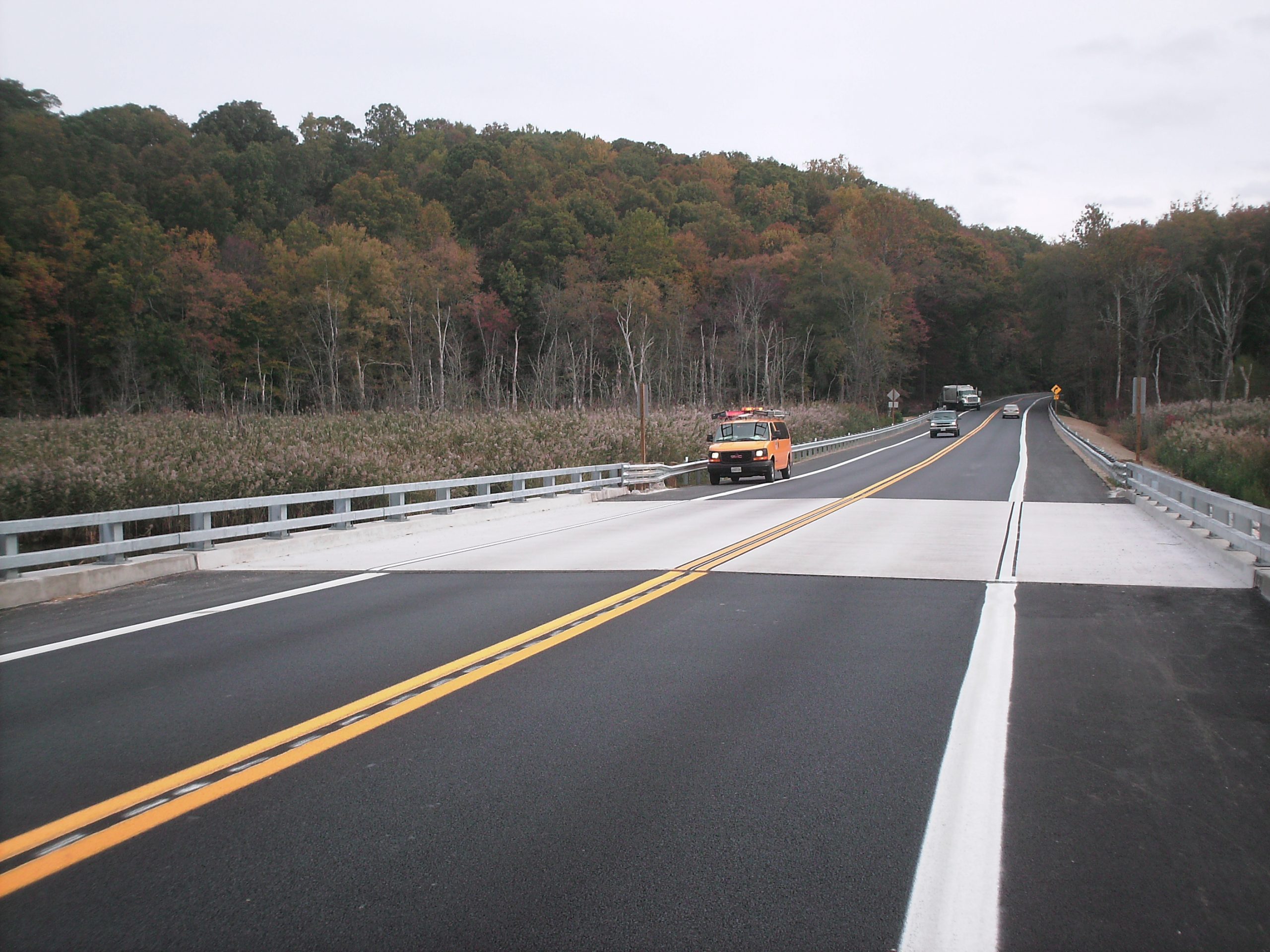
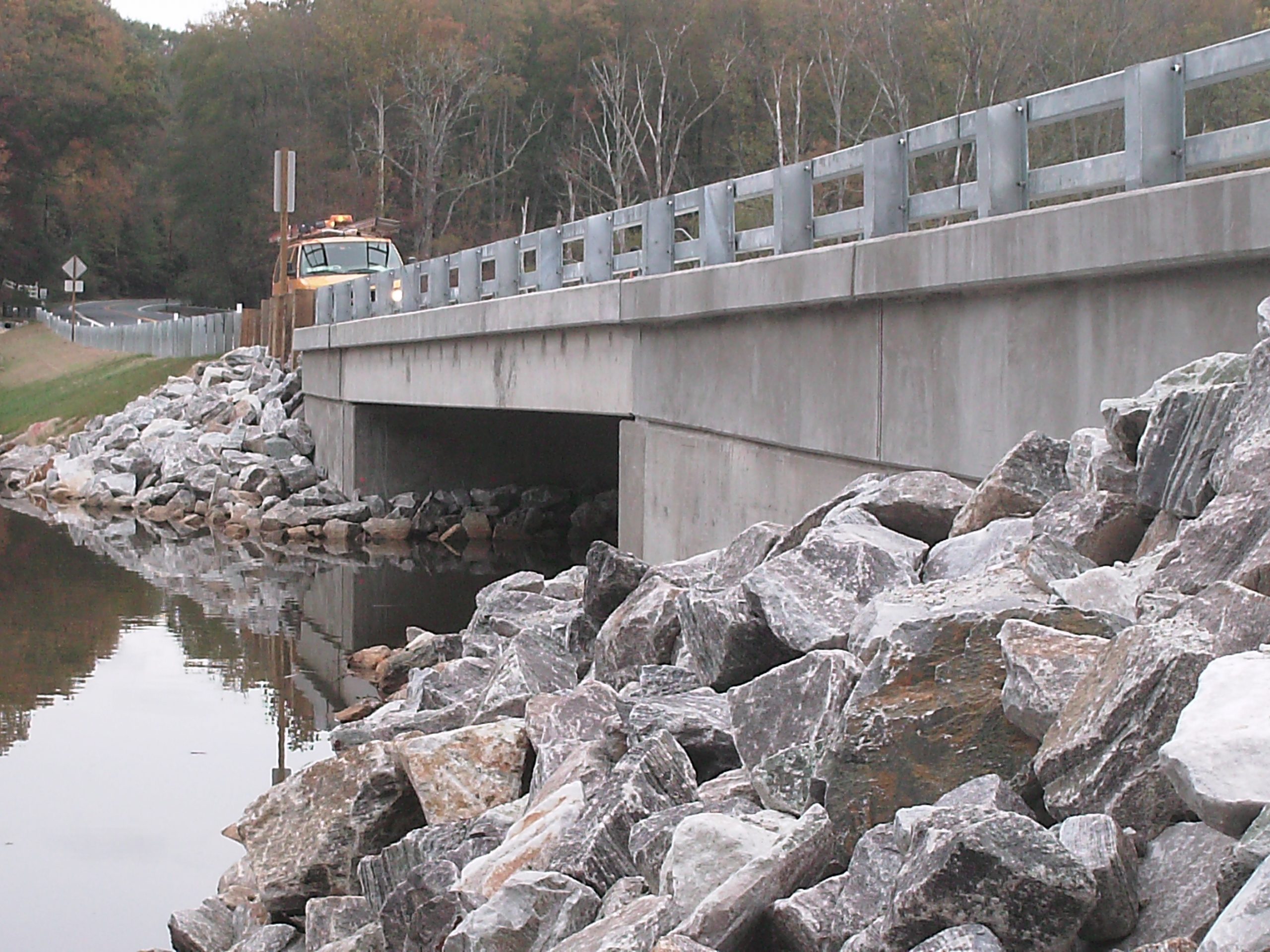
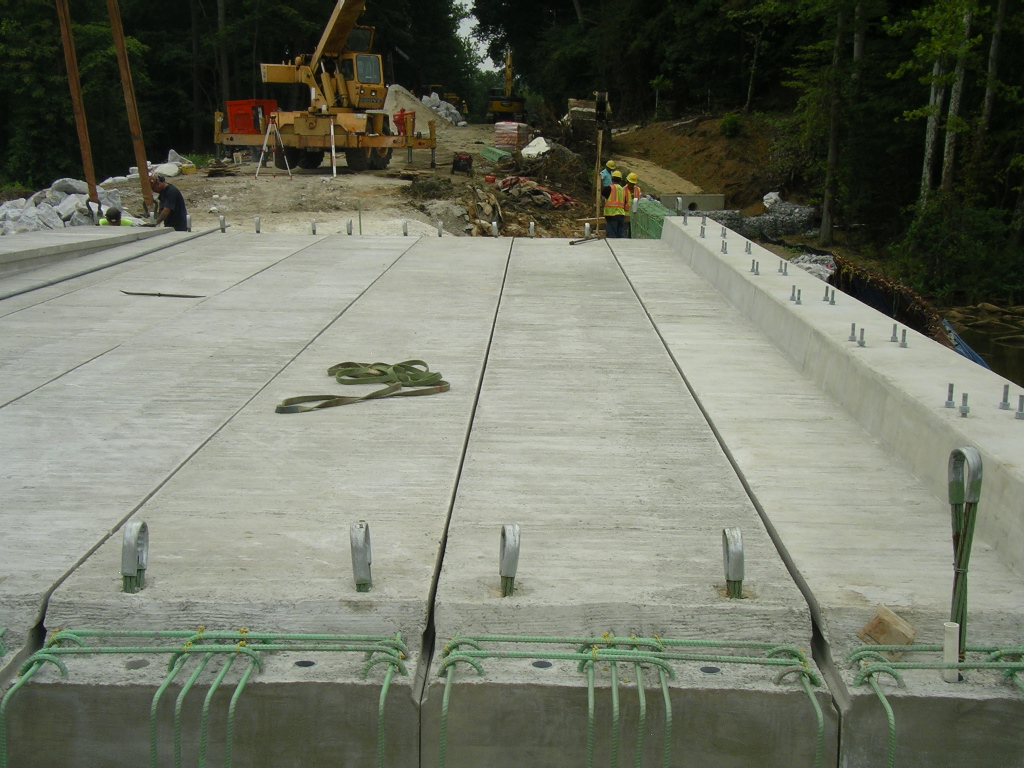
Project Summary:The superstructure consists of prestressed concrete adjacent slab beams. Outside beams were precast with curbs and embedded anchor bolts to connect steel traffic railing.
Project Location:
on MD Route 450 over Bacon Ridge Branch west of the city of Annapolis
Impact Category:
Tier 5 (within 3 months)
Mobility Impact Time:
- ABC: 67-day closure to complete both bridges
- Conventional: 3 additional weeks per bridge
Primary Drivers:
- reduced traffic impacts
- improved work-zone safety
- reduced onsite construction time – to open the bridge in time for school in the fall
- improved site constructability
- improved material quality and product durability
- reduced life-cycle cost
Dimensions:
58-ft-long and 44-ft-wide single-span prestressed concrete slab beam bridge
Average Daily Traffic (at time of construction):
8000
Traffic Management:
extended use of 10-mile detour
Existing Bridge Description:
The existing bridge was a 36-ft-long, 26.67-ft-wide single-span concrete beam bridge with concrete substructure. It had two 12-ft-wide traffic lanes and no shoulders. Built in 1925, the bridge was rated as structurally deficient and functionally obsolete and required replacement.
Replacement or New Bridge:
The replacement bridge has two 12-ft-wide traffic lanes and two 8-ft-wide shoulders. The cross-section consists of eleven 2.25-ft-deep slab beams (one 3-ft-wide beam and ten 4-ft-wide beams). The beams are post-tensioned together transversely, with a cast-in-place 4,000 psi reinforced concrete overlay that increases from the 4-inch-thick minimum at the edges to accommodate the two percent cross-slope from baseline. The outside beams were precast with curbs and embedded anchor bolts to connect the steel traffic railing. The integral abutments were cast in place over 12.75-inch-diameter steel pipe piles. The surface profile was elevated relative to the old bridge to reduce an existing flooding problem.
Construction Method:
The construction contract was the first Maryland State Highway Administration (MDSHA) project to include more than one significant bridge awarded to one contractor. It included two bridges that were designed as similar as possible: the MD 450 Bridge over Bacon Ridge Branch and the MD 28 Bridge over Washington Run. The bridges are in different districts of the state.
The slab beams were fabricated at a precast plant. MDSHA required the contractor to assemble the slab beams at the plant prior to shipment to ensure proper alignment of the transverse ducts.
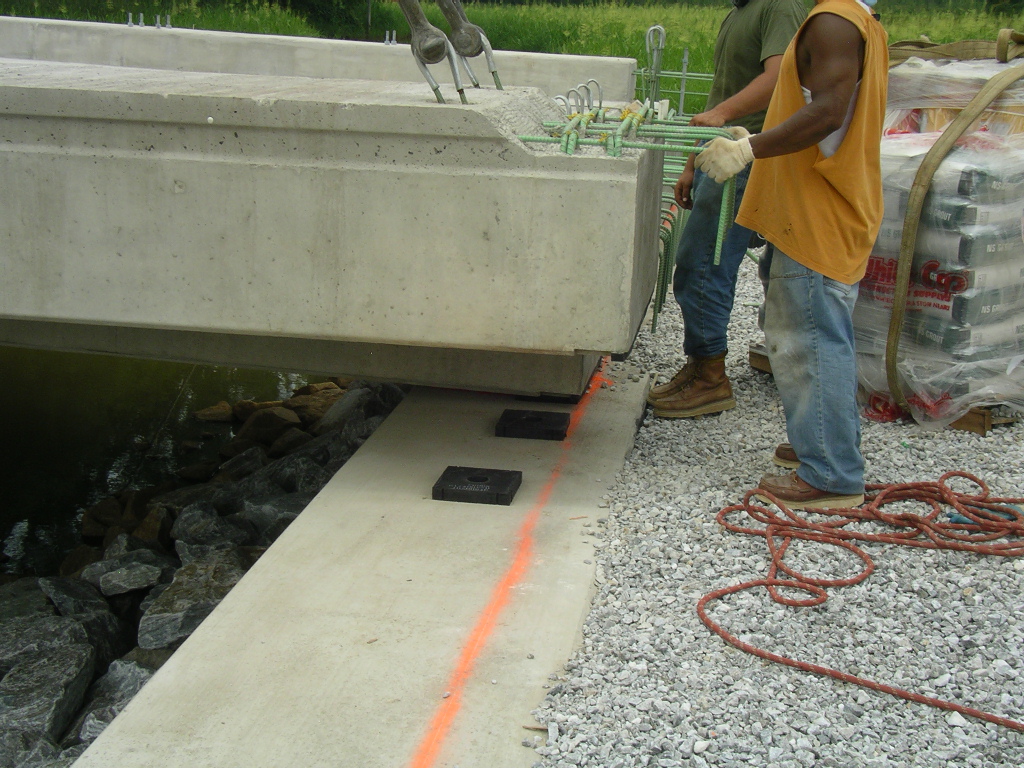
The contractor demolished the existing bridge and constructed the abutments using conventional construction techniques. Cranes were used to place the slab beams on elastomeric bearing pads. The construction crew then tensioned the transverse tie-rods, grouted the shear keys between beams, and placed reinforcement for the cast-in-place overlay. The contractor was required to place the reinforcing mat such that it could be lifted off the bridge just prior to placement of the overlay to permit the entire deck to be cleaned. Prior to beginning the overlay placement, the contractor was then required to float a cement slurry across the bridge deck and work it into the top of the slab beams. Keeping the slurry moist with a misting operation, the contractor then placed the reinforcing mat back into position and cast the special-mix Portland cement concrete overlay and integral abutment backwalls as a continuous placement while the slurry was in a non-set condition. During the seven days that the overlay cured, the contractor installed the bridge railing and did other finish work prior to opening the bridge to traffic.
The contract included an incentive of $9,000 per day the bridge was opened earlier than 67 days, with a maximum of $63,000. The disincentive was $9,000 per day the bridge was closed longer than 67 days, with no maximum.
Stakeholder Feedback:
Contract administration was a challenge because MDSHA construction projects are administered by the local district offices and the projects were located in different districts. Decisions varied between the two districts, requiring the contractor to administer the projects as two independent projects and resulting in duplication of effort.
High Performance Material:
Project Planning
Decision Making Tools:Site Procurement:
Project Delivery: design-bid-build
Contracting: full lane closure, incentive / disincentive clause
Geotechnical Solutions
Foundations & Walls:Rapid Embankment:
Structural Solutions
Prefabricated Bridge Elements: adjacent slab beamPrefabricated Bridge Systems:
Miscellaneous Prefabricated: precast curb, grouted key closure joint, PT ducts/bonded, standard concrete overlay
Costs & Funding
Costs:The engineer’s estimate for the project was $ 3.7 million. The low bid was $ 3.5 million for the two bridges ($200,000 = 5% lower than engineer’s estimate). There were 7 bidders.
ABC techniques saved an estimated $45,000 in delay-related user costs. The net savings on the project totaled $61,000.
Funding Source:
Federal Only
Incentive Program:
HfL (Highways for Life): $717,157 (20%); includes MD 28
Additional Information
Downloadable Resources
Contract Plans:
View MD-450-Contract-Plans.pdf
View MD-450-Special-Provisions.pdf
View 08_02_25.AX4695180_MD-2008-MD-450.tab_.pdf
View MD-450-Time-Cost-Comparison.pdf
Other Related Information:
Other Related URLs:
Maryland State Highway Administration (MDSHA)
Contacts
Owner:
Jeffrey Robert, P.E.
Senior Project Engineer
Maryland State Highway Administration
Email: jrobert@sha.state.md.us
Phone: 410-545-8327